

Yoga Group Classes
Whether you want to build strength, improve mobility and flexibility, increase energy and focus, reduce stress, or find more balance in your daily life…
Let’s start today.
Online & offline Group Yoga Classes
Join a free weekly online yoga class, beginner-friendly, live-streamed on Telegram.
Or catch me in person in Canton Bern:
– On Tuesdays and Saturdays I teach donation-based classes at Pandora under SPORTEGRATION.
– I substitute classes at La Luna in Langnau or Pandora and Yama Yoga & Co. in Bern
This week
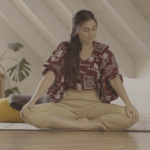
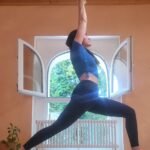
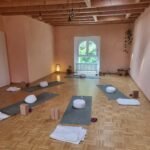

Calendar
Hatha Yoga
Hatha yoga is the root from which most modern yoga styles branch out, vinyasa, power yoga, yin, and more all trace back to it. It’s not inherently easy or difficult; it’s what you make it. Sessions bring together asana (postures), pranayama (breathwork), meditation, and deep relaxation (Yoga Nidra), blended in real time to match your body, energy, and goals that day. There’s no fixed sequence: it can lean into strength, mobility, and flexibility one day, or breathwork, stress reduction, and mindfulness the next, whatever’s genuinely useful for you right now.
Yin Yoga
Yin yoga is a slower, more modern practice, developed in the West with its base in Hatha postures and Daoist principles of energy flow. Rather than moving through poses, you hold them, often for three to five minutes at a time, working into the connective tissue, fascia, ligaments, joints, rather than the muscles. It’s less about strength and more about surrender: a passive, deeply calming counterpart to more active styles. Ideal for anyone dealing with stress, tight or restricted joints, a need to genuinely slow down, or as a complement to a more active practice or sport. Sessions focus on flexibility, joint mobility, and quieting the nervous system, adapted to your body and how much stillness you’re up for that day.
FAQ
What is yoga good for?
Yoga can support you in many different ways, depending on what you are looking for. You might come to improve flexibility, mobility, strength, posture, balance, or lung capacity, or to support goals like weight management, muscle gain, or recovering from physical strain in a sustainable way.
It can also help you if you are dealing with stress, anxiety, low mood, low energy, or difficulty finding motivation in daily life. Many people also use yoga as a way to improve sleep, build emotional resilience, and create more calm and focus in their day-to-day routine.
Unlike many forms of exercise, yoga trains your body and mind at the same time. Through movement, breathwork, meditation, and relaxation, you can develop not only physical strength and mobility, but also more patience, awareness, and mental clarity.
Over time, this combination can help you feel more balanced, more in control of your energy, and better able to deal with both physical and mental demands in everyday life.
Is yoga a form of exercise?
Yoga is a much broader practice that traditionally includes movement (asana), breathing techniques (pranayama), meditation, and other practices aimed at developing awareness and wellbeing.
That said, yoga often includes exercise. Many asanas use your own body weight in a way that is similar to calisthenics and can improve strength, mobility, flexibility, balance, and coordination. Depending on the style and intensity, a yoga session can range from gentle and restorative to physically challenging.
While exercise is one aspect of yoga, it is not the whole practice.
What do Asana, Pranayama, Meditation, Yoga Nidra, and Mantra mean?
Asana refers to the physical postures practiced in yoga. These movements help develop strength, mobility, flexibility, balance, and body awareness.
Pranayama means breath control or breathwork. These techniques are used to influence energy, calm the nervous system, improve focus, and support lung capacity and overall breathing efficiency.
Meditation is the practice of training attention and awareness. It helps develop focus, mental clarity, emotional regulation, and a greater sense of calm and presence.
Yoga Nidra is a guided deep relaxation practice, often described as “yogic sleep.” It supports nervous system recovery, stress reduction, improved sleep, and deep relaxation while maintaining awareness.
Mantra refers to the repetition of a sound, word, or phrase, often used to focus the mind and support meditation. This can include traditional Sanskrit sounds such as “Om” or other mantras that may be practiced through chanting or silent repetition.
Together, these elements form a complete yoga practice that works on both the body and the mind.
Do you teach mantras?
Yes. The universal sound “Om” is included as part of the practice. If you are open to it, we can also explore other mantras together and include chanting in the sessions.
Mantra practice can help focus the mind, support breath awareness, and create a sense of calm and grounding. The repetition of sound can also reduce mental overactivity, improve concentration, and make it easier to enter a meditative state. For many people, it also adds a deeper sense of connection and intention to their practice.
Mantra work is always optional and will be introduced in a way that feels comfortable for you.
What style of yoga do you teach?
My teaching is rooted in Hatha Yoga as it was taught to me in India. Sessions combine asana, pranayama, meditation, and Yoga Nidra.
I place a strong emphasis on Yoga Nidra, a guided relaxation practice that helps calm the nervous system and develop deeper awareness. Rather than following a fixed sequence, each session is adapted to the person, their goals, and how they are feeling that day.
For more information about my background or training, please visit the About or Credentials page, respectively.
What is included in a yoga session?
A typical session includes pranayama (breathwork), asana (physical postures), meditation, and Yoga Nidra. The balance between these elements depends on your goals and needs.
Sessions may focus more on mobility, flexibility, strength, stress reduction, breathing, mindfulness, recovery, or a combination of these. No two sessions are exactly the same, as the practice is adapted to the individual rather than following a generic sequence.
How do I prepare for a yoga session?
For the best experience, try not to eat at least 1–2 hours before the session, as practising on a lighter stomach can make movement and breathwork more comfortable. It is also recommended to avoid heavy meals close to practice.
Avoid drinking large amounts of water immediately before or during the session. Small sips are fine if needed, but it is generally better to stay hydrated before the session starts.
Wear comfortable clothing that allows free movement, and make sure you have enough space to move safely (if online).
For online 1-on-1 sessions, make sure you have an appropriate camera setup.
Before we begin, it is important that you let me know about any physical injuries, pain, limitations, or relevant medical conditions, as well as any mental stress, anxiety, or other factors that may affect your practice. This allows the session to be adapted safely and appropriately to your needs.
Most importantly, arrive with an open mind and listen to your body throughout the practice. Each session is adjusted to how you are feeling on the day.
How do I book and pay for an appointment?
You can book an appointment directly, and I will send you an invoice afterwards. Payment details and instructions will be included on the invoice.