Colon Cancer and Lifestyle
Colon cancer, more broadly referred to as colorectal cancer, is one of the most common cancers worldwide. While age and genetics certainly play a role, research over the past several decades has consistently shown that many cases are linked to modifiable lifestyle factors.
This naturally raises an important question: how much of colon cancer risk is actually within our control?
Large prospective studies, including the Nurses’ Health Study, the Health Professionals Follow-up Study, and comprehensive reviews from the World Cancer Research Fund (WCRF) and the International Agency for Research on Cancer (IARC) suggest that lifestyle plays a substantial role in colorectal cancer risk. Importantly, no single food or habit determines whether someone will develop cancer. Instead, risk appears to accumulate over many years through the combined effects of diet, body weight, physical activity, alcohol, smoking, and other factors.
Lifestyle Appears to Be the Largest Modifiable Risk Factor
Unlike inherited genetic syndromes, which account for only a small proportion of colorectal cancers, most cases occur sporadically.
According to the World Cancer Report, approximately 40% of the global burden of colorectal cancer is attributable to lifestyle-related factors, including diet, physical inactivity, smoking, excess body weight, and alcohol consumption. This means that while genetics cannot be changed, many important risk factors can.
It is equally important to recognise that lifestyle influences risk, not certainty. People with very healthy lifestyles can still develop colon cancer, while others with several risk factors may never develop the disease.
Red Meat, Processed Meat, and Colon Cancer
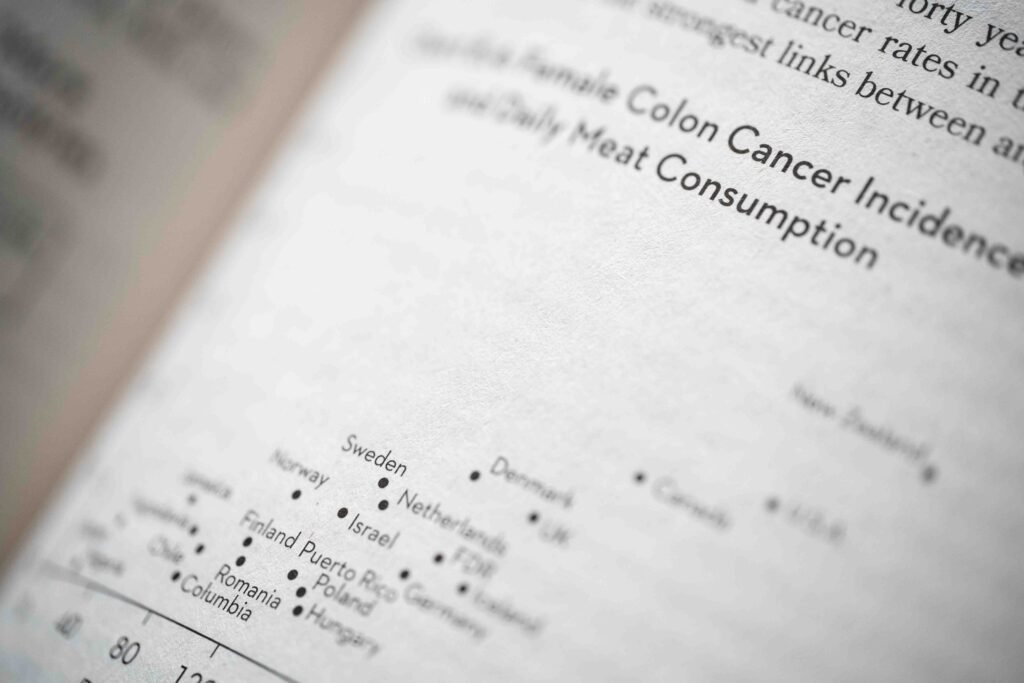
Perhaps the most widely discussed dietary risk factor is meat consumption. Current evidence makes an important distinction between processed meat and unprocessed red meat.
Processed meats, including bacon, sausages, salami, ham, and hot dogs, have consistently been associated with an increased risk of colorectal cancer across numerous large observational studies. In 2015, the International Agency for Research on Cancer classified processed meat as a Group 1 carcinogen, meaning there is sufficient evidence that it causes colorectal cancer in humans.
Red meat (such as beef, pork, and lamb) has also been associated with increased colorectal cancer risk, although the evidence is less consistent. IARC classified red meat as probably carcinogenic (Group 2A) because the available evidence is considered more limited than for processed meat.
Importantly, these classifications describe the strength of the evidence, not the magnitude of the risk. Smoking and processed meat are both classified as Group 1 carcinogens, but smoking increases cancer risk far more dramatically than processed meat.
Researchers believe several mechanisms may contribute to the association, including compounds naturally present in red meat (such as haem iron), chemicals formed during processing (such as nitrites), and carcinogenic compounds produced during high-temperature cooking. However, no single mechanism fully explains the relationship.
Overall dietary pattern appears to matter more than any individual food.
Fibre and Whole Plant Foods
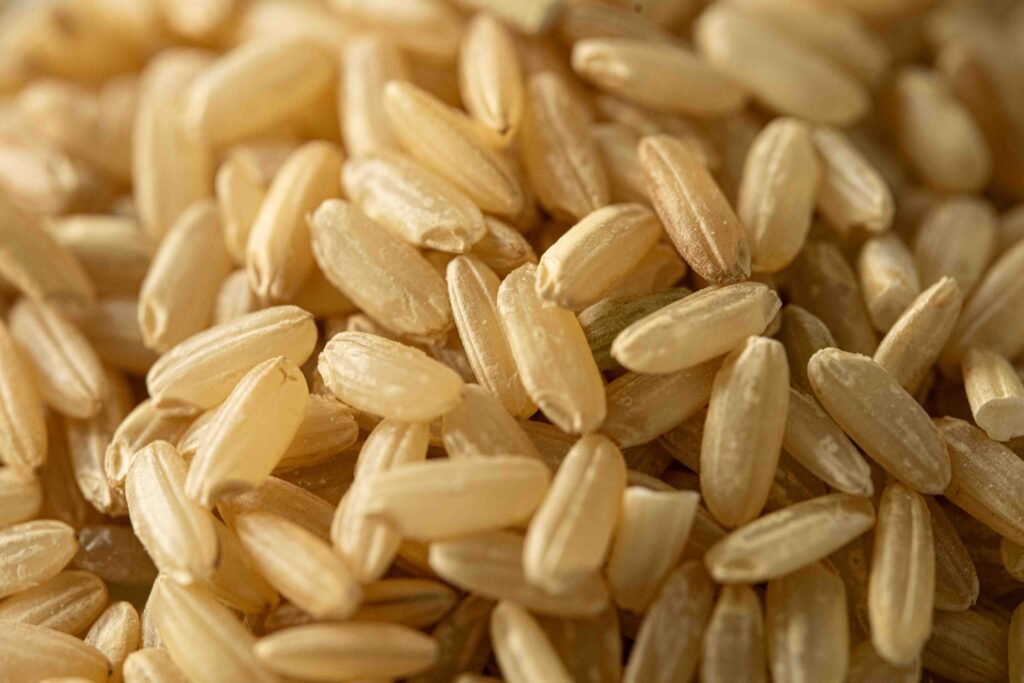
If processed meat represents one side of the equation, dietary fibre represents the other. Large prospective studies consistently show that people who consume more whole grains, fruits, vegetables, and legumes have lower rates of colorectal cancer.
Fibre is thought to reduce cancer risk through several mechanisms. It increases stool bulk, reduces the time potential carcinogens remain in contact with the intestinal lining, and supports a healthy gut microbiome. Fermentation of fibre by gut bacteria also produces short-chain fatty acids such as butyrate, which may help maintain the health of colon cells.
Rather than focusing solely on avoiding certain foods, many experts emphasise increasing fibre intake as one of the most effective dietary strategies for reducing colorectal cancer risk.
Body Weight and Physical Activity
Body weight is another well-established risk factor. People living with overweight or obesity have a higher risk of developing colorectal cancer, particularly colon cancer. Excess body fat is associated with chronic low-grade inflammation, insulin resistance, and changes in hormones that may promote tumour development.
Physical activity appears to have the opposite effect. Regular exercise has consistently been associated with a lower risk of colon cancer across numerous cohort studies. While the exact biological mechanisms remain under investigation, improved insulin sensitivity, reduced inflammation, healthier body weight, and faster intestinal transit time are all thought to contribute. And, the protective effect of physical activity appears to extend beyond weight management alone.
Alcohol and Smoking
Numerous studies have shown that higher alcohol consumption is associated with an increased risk of colorectal cancer, with risk rising as alcohol intake increases. There does not appear to be a completely risk-free level for cancer prevention.
Smoking is associated with both colorectal cancer and the development of precancerous polyps. The increased risk tends to become more apparent after many years of smoking, highlighting the cumulative nature of exposure.
What About Genetics?
Lifestyle is only part of the picture.
Age remains one of the strongest risk factors, with most colorectal cancers occurring after the age of 50, although rates among younger adults have increased in many countries.
Family history also matters. Having a first-degree relative with colorectal cancer increases risk, and inherited syndromes such as Lynch syndrome or familial adenomatous polyposis carry particularly high lifetime risks. Fortunately, these inherited conditions account for only a minority of all colorectal cancers.
Inflammatory bowel diseases, including ulcerative colitis and Crohn’s disease affecting the colon, also increase long-term risk.
The Bigger Picture: Patterns Matter More Than Individual Foods
One of the most important findings from modern nutritional research is that overall lifestyle patterns predict colorectal cancer risk better than any single dietary component.
Researchers analysing data from the Nurses’ Health Study and the Health Professionals Follow-up Study found that people who most closely followed the World Cancer Research Fund’s recommendations, including maintaining a healthy weight, being physically active, eating a fibre-rich diet, limiting processed and red meat, avoiding smoking, and moderating alcohol intake, had substantially lower rates of colorectal cancer than those with the least healthy lifestyles.
This reflects an important principle in nutrition science: health outcomes are rarely determined by one food. They emerge from long-term patterns of behaviour.
What Can We Conclude?
Current scientific evidence suggests that lifestyle is one of the largest modifiable determinants of colorectal cancer risk.
Among dietary factors, the strongest evidence links processed meat with increased risk, while high consumption of dietary fibre, whole grains, fruits, vegetables, and regular physical activity are consistently associated with lower risk. Maintaining a healthy body weight, limiting alcohol, and avoiding smoking further reduce risk.
At the same time, colon cancer is a complex disease influenced by age, genetics, medical history, and chance. No lifestyle guarantees prevention, and no single food causes cancer on its own.
The evidence points toward a simple conclusion: rather than focusing on individual “superfoods” or “dangerous foods,” long-term healthy lifestyle patterns appear to offer the greatest protection.
References
International Agency for Research on Cancer (IARC). (2018). Red Meat and Processed Meat (IARC Monographs Volume 114).
https://publications.iarc.who.int/Book-And-Report-Series/Iarc-Monographs-On-The-Identification-Of-Carcinogenic-Hazards-To-Humans/Red-Meat-And-Processed-Meat-2018
International Agency for Research on Cancer (IARC). (2015). Carcinogenicity of consumption of red and processed meat. The Lancet Oncology.
https://www.iarc.who.int/news-events/iarc-monographs-volume-114-evaluation-of-consumption-of-red-meat-and-processed-meat/
World Cancer Research Fund/American Institute for Cancer Research. (2018). Diet, Nutrition, Physical Activity and Colorectal Cancer.
https://www.wcrf.org/research-policy/evidence-for-our-recommendations/limit-red-processed-meat/
National Cancer Institute. Colorectal Cancer Prevention (PDQ®) – Health Professional Version.
https://www.cancer.gov/types/colorectal/hp/colorectal-prevention-pdq
American Cancer Society. Diet and Physical Activity: What’s the Cancer Connection?
https://www.cancer.org/cancer/risk-prevention/diet-physical-activity.html
Giovannucci, E., et al. Nurses’ Health Study & Health Professionals Follow-up Study – Lifestyle factors and risk of colorectal cancer.
https://www.nurseshealthstudy.org/
Song, M., Giovannucci, E. (2016). Preventable Incidence and Mortality of Carcinoma Associated With Lifestyle Factors Among White Adults in the United States. JAMA Oncology.
https://jamanetwork.com/journals/jamaoncology/fullarticle/2513180
World Health Organization. Colorectal Cancer.
https://www.who.int/news-room/fact-sheets/detail/cancer